
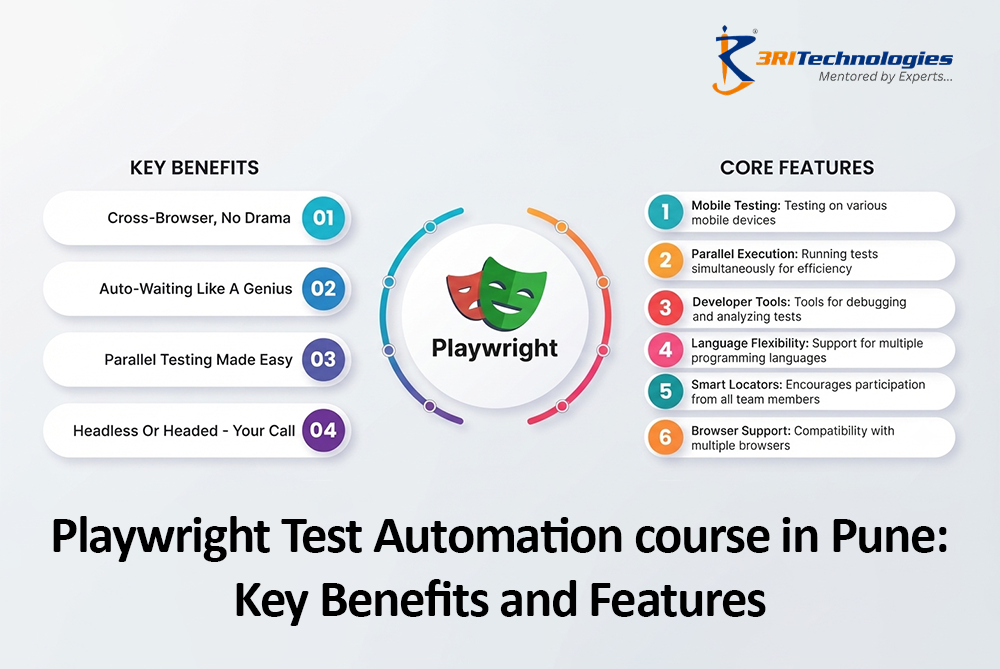
Can a single testing framework really cut your release cycles in half while catching bugs across every major browser? For software testers watching manual QA cycles stretch longer with every sprint, that question isn’t rhetorical—it’s urgent. Playwright has emerged as one of the most reliable answers, and Pune’s booming IT ecosystem has made it the city of choice for testers looking to upskill. If you’re exploring Automation Testing Courses in Pune, understanding what Playwright offers is the first step toward a smarter career move.
What Is Playwright? Key Features Every Automation Tester Should Know
Playwright is an open-source test automation framework built by Microsoft to handle modern, JavaScript-heavy web applications the way they actually behave in production—dynamic, asynchronous, and often unpredictable. Where older automation testing tools would stumble over elements that load a fraction of a second late, Playwright was engineered from day one to read the actual state of a page before acting on it.
Testers switching over from Selenium usually notice this within the first week: scripts stop breaking for no reason. That single shift — from fighting flaky tests to trusting your test suite — is a big part of why Playwright testing has found such a loyal following among QA professionals.
Key Features of Playwright
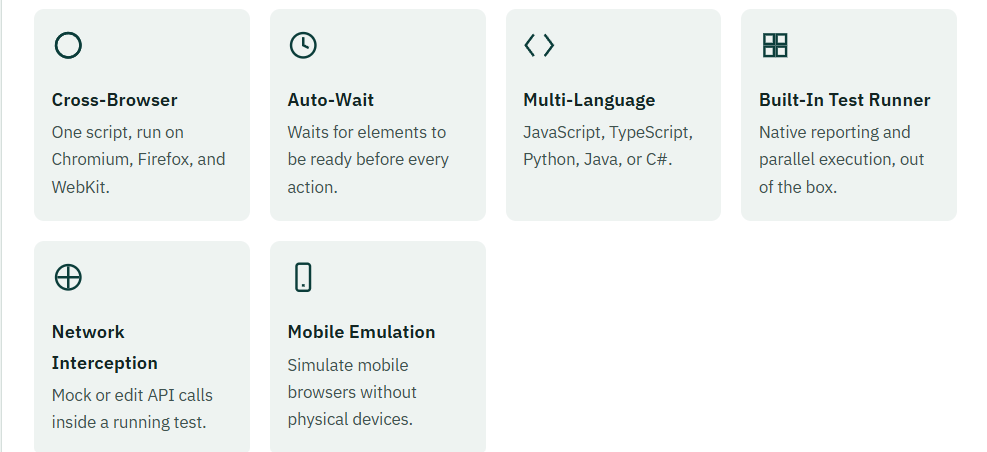
Modern organizations prefer Playwright because it simplifies complex testing tasks while improving productivity. Here are some of its most useful features:
1. Cross-Browser Testing with One Script
Playwright’s biggest selling point is that a single script can run across every major browser engine. Instead of maintaining separate suites for each one, teams write the test once and let Playwright handle the rest. It’s one of the reasons automation testing feels so much less repetitive with this tool.
- Google Chrome
- Microsoft Edge
- Firefox
- Safari (WebKit)
This removes the need for browser-specific scripts and keeps the user experience consistent everywhere.

2. Smart Auto-Wait Functionality
Older automation tools usually need manual wait commands sprinkled through every test. Playwright skips that step entirely—it automatically waits for elements to be ready before acting on them, which makes Playwright test automation noticeably more reliable out of the box.
This results in:
- Fewer test failures
- More stable automation scripts
- Reduced maintenance effort
Testers spend less time fixing scripts and more time improving software quality.
3. Faster Test Execution
Playwright runs tests in parallel, so multiple cases execute at the same time instead of queuing one after another. For teams shipping frequently, this kind of speed is what makes automation testing practical at scale rather than a bottleneck.
Benefits include:
- Faster regression testing
- Reduced project timelines
- Quick feedback for developers
This feature is especially valuable in Agile and DevOps environments where frequent releases are common.
4. Built-in Reports and Debugging
Every run generates a clear trail of evidence automatically, so nobody has to dig through logs manually to figure out what broke. It’s a small feature that saves a lot of debugging time once Playwright test automation is running at any real scale.
Playwright automatically generates:
- HTML reports
- Screenshots
- Videos
- Error logs
These features help teams quickly identify issues and resolve defects efficiently.
5. Mobile Testing Support
Testing mobile experiences no longer requires expensive device labs or large collections of physical smartphones. Playwright lets you simulate multiple devices, screen sizes, touch interactions, and network conditions directly within the framework. This makes mobile testing faster, more affordable, and easier to integrate into your development and CI/CD workflow while maintaining broad test coverage.
This helps validate:
- Responsive websites
- Mobile applications
- User experience across devices


Why Playwright Testing are Popular for Test Automation
Playwright’s rise wasn’t a marketing win—it happened because web applications got harder to test, and most existing tools weren’t keeping pace. As frontend frameworks grew more complex, testers needed something that matched that complexity without adding friction to their daily workflow.
- Speed: Playwright talks to browsers directly instead of routing through extra layers, which shows up as noticeably faster test runs.
- Reliability: Fewer false failures mean testers spend less time re-running suites and more time actually testing.
- Strong backing: Active maintenance from Microsoft and a growing open-source community keep the framework current.
- Built for modern apps: Handles iframes, shadow DOM, and single-page app behavior far more smoothly than legacy tools.
- Scales with you: Native parallelization means large test suites don’t have to take all night to finish.
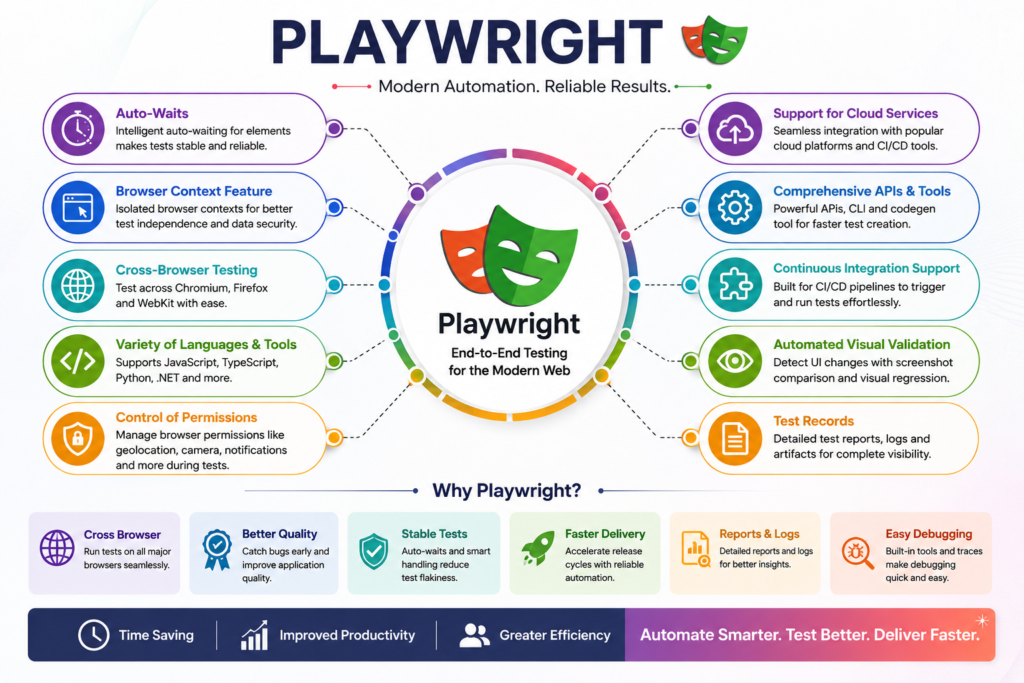
Organizations are increasingly adopting Playwright because it offers faster execution, greater reliability, and simplified maintenance compared to older testing frameworks.
Why Companies Prefer Playwright
- Supports modern web technologies
- Excellent cross-browser compatibility
- Reduces flaky test cases
- Faster execution than many traditional frameworks
- Easy integration with CI/CD pipelines
- Strong open-source community support
- Suitable for end-to-end testing
This gap in day-to-day usability is exactly why more institutes offering Automation Testing Courses in Pune are rebuilding their syllabus around Playwright instead of treating it as a footnote to Selenium.
Key Benefits: Why Testers Prefer Playwright
Beyond the spec sheet, Playwright changes how testers actually spend their day. Less time gets lost chasing unstable scripts, and more time goes into thinking through real test coverage and edge cases.

- Lower maintenance: Smart locators and auto-waiting mean small UI tweaks don’t send your whole suite red.
- Faster feedback: Quick browser launches and parallel runs shrink the gap between writing a test and seeing the result.
- Sharper debugging: The trace viewer and run recordings make it easy to pinpoint exactly where and why something failed.
- Realistic scenarios: Network mocking lets testers recreate slow connections, failed calls, or offline states without needing a live broken environment.
- Career traction: As more companies adopt Playwright, hands-on experience with it becomes a genuine differentiator in interviews.

For learners exploring Automation Testing Classes Near Me choosing a curriculum that includes Playwright provides exposure to one of today’s most in-demand automation testing tools. To invest time in, Playwright is one of the safer long-term bets—whether the goal is landing a first QA role or moving from manual testing into automation.
Get Start Smarter Test Automation with 3RI Technologies
Reading documentation can teach you syntax, but it rarely builds the confidence needed to walk into a QA interview. That gap is exactly what structured, mentor-led training is meant to close. 3RI Technologies runs hands-on Automation Testing Courses in Pune built around real project work, covering Playwright alongside the core automation testing fundamentals that hiring teams actually check for.



The training style at 3RI Technologies leans practical rather than lecture-heavy. Learners build test frameworks from scratch, work with live projects, and get comfortable with reporting and CI/CD integration — skills that go well past writing a single test script.
For anyone specifically searching for Automation Testing Courses in Pune with Placement, 3RI Technologies also offers placement support, resume guidance, and interview preparation, Playwright automation certification courses helping learners move from classroom exercises to actual job offers. Batches are structured for both freshers and experienced professionals, with flexible timings for people currently working.