
Choosing the right career path right after school can feel overwhelming, especially with technology reshaping every industry. IT Courses in Pune have become one of the most popular choices among students who want quick, job-ready skills through focused, practical training. These programs cover in-demand areas like coding, cloud computing, and cybersecurity, giving students the technical foundation employers look for. This blog covers eligibility criteria, fees, and long-term career scope, so you can make an informed decision.
Best IT Courses After 12th: Which Course Should You Choose?
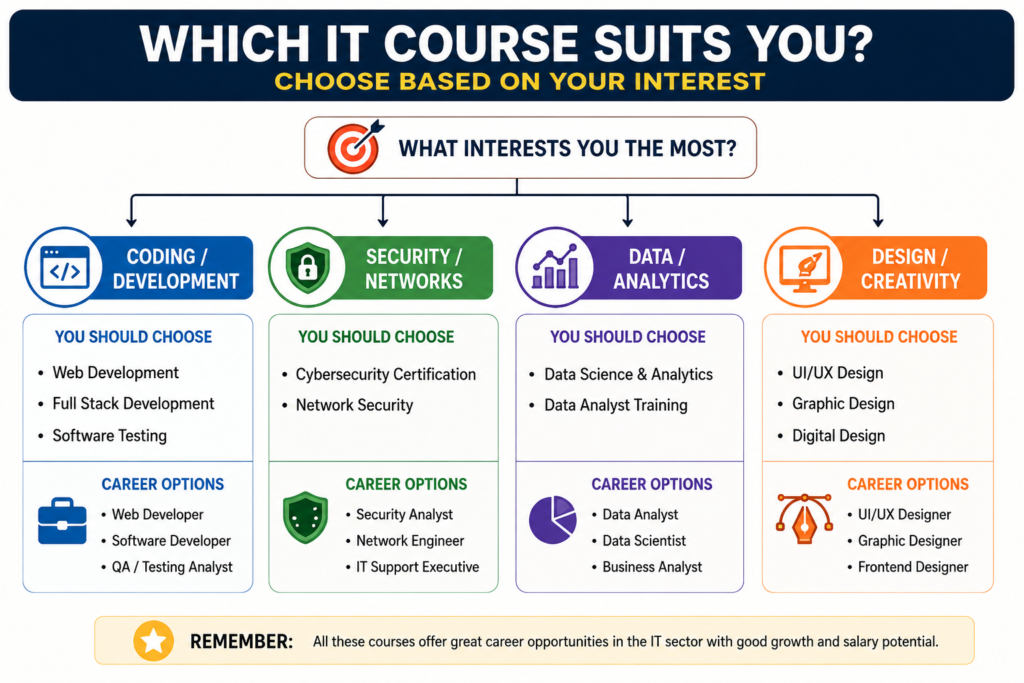
Picking the right course among the many types of IT courses after 12th can be confusing for a fresher, which is why guidance from an experienced training institute makes a real difference. 3RI Technologies offers a range of IT courses designed specifically for 12th-pass and graduate students, including web development, software testing, data science, and cloud computing programs. Along with classroom and live-project training, the institute provides placement assistance, meaning students get resume support, interview preparation, and access to hiring companies once they complete their course. This combination of practical training and job support is what helps many students move from learning basics to actually working in the IT sector within a short span of time. Beyond this, here are some of the most in-demand course options for students starting out:
- Diploma in Computer Applications – a broad foundation covering computer basics, office tools, and simple programming.
- Web Development & Full Stack Development – building websites and applications using HTML, CSS, JavaScript, and backend frameworks.
- Data Science & Analytics – statistical analysis, data visualization, and basic machine learning concepts using tools like Python and SQL.
- DevOps – automation, CI/CD pipelines, and tools like Docker, Jenkins, and Kubernetes for teams that ship software faster.
- Cybersecurity Certification Courses – protecting systems and networks from digital threats, a fast-growing niche.
- Cloud Computing (AWS, Azure, Google Cloud) – managing cloud infrastructure, one of the highest-demand skills today.
- AI & Machine Learning – training models and building intelligent systems, suited to learners who enjoy analytical, forward-looking work.
- Software Testing – a practical entry point for students who enjoy problem-solving over heavy coding.
When shortlisting an institute for any of these, it helps to check a few practical things beyond the syllabus itself:
- Whether the institute has a proven placement track record and tie-ups with hiring companies.
- Whether the curriculum leans on live, hands-on projects rather than theory alone.
- How experienced the trainers are with real industry work, not just teaching.
- Whether batch timings are flexible enough for both students and working professionals.
For students in Maharashtra, the city has a large concentration of IT parks, startups, and multinational offices actively hiring freshers, which is why this destination is especially popular for technical training. Institutes offering IT Courses in Pune with Placement support are worth prioritizing, since job assistance after course completion often matters more than the course content alone.


Eligibility for IT Courses After 12th: Who Can Enroll?
One of the biggest advantages of IT training courses is that entry requirements are simple, unlike the cutoff-based admissions colleges follow. General IT Course Eligibility criteria include:
- Completion of 12th grade from a recognized board (Science, Commerce, or Arts stream — most courses don’t restrict by stream).
- No fixed minimum percentage requirement at most training institutes — passing 12th is usually enough to enroll.
- Basic computer literacy is preferred but not mandatory for beginner-level programs.
- Some institutes prefer a Maths or Computer Science background for advanced courses like data science, though it isn’t a strict rule everywhere.
There are no entrance exams or merit lists — institutes typically admit students after a short counselling or aptitude discussion, making it easy to start building practical skills right away.
IT Course Fees After 12th: Fees & Duration Explained
IT course fees vary widely depending on the course type, duration, and training institute reputation. Short certification courses are generally more affordable than advanced or integrated training programs. Here’s a quick comparison to give you a realistic picture:
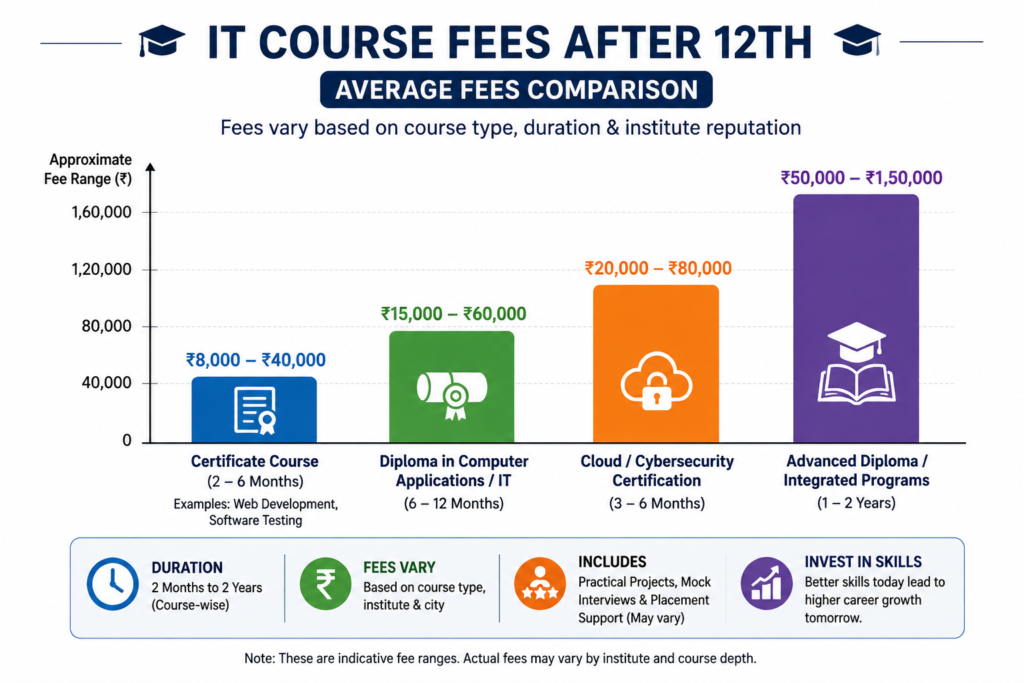
| Course Type | Typical Duration | Approximate Fee Range |
| Certificate Course (e.g., Web Development, Software Testing) | 2–6 months | ₹8,000 – ₹40,000 |
| Diploma in Computer Applications/IT | 6–12 months | ₹15,000 – ₹60,000 |
| Cloud/Cybersecurity Certification | 3–6 months | ₹20,000 – ₹80,000 |
| Advanced Diploma / Integrated Programs | 1–2 years | ₹50,000 – ₹1,50,000 |
These figures are indicative and can vary by city, institute, and course depth. It’s worth checking whether the fee includes practical projects, mock interviews, and placement support, since these add real value beyond classroom lectures. Students researching detailed comparisons often refer to resources like the Top 10 IT training courses for job placement in 2026 to understand which programs currently offer the best return on investment.



Career Scope After IT Courses: Skills & Opportunities
The scope of IT course offerings extends far beyond just coding jobs, and career opportunities in the IT sector span nearly every industry today—banking, healthcare, e-commerce, and manufacturing all hire IT professionals. Here’s a breakdown of common entry-level roles, the skills they demand, and where they can lead:
| Role | Key Skills Required | Career Opportunities | Growth Potential |
| Junior Web Developer | HTML, CSS, JavaScript, React/Angular basics | Startups, IT service companies, freelance projects | Can grow into a full-stack developer or Team Lead |
| IT Support Executive | Troubleshooting, networking basics, communication | Corporate IT helpdesks, banking, healthcare IT teams | Can move into System Administrator or Network Engineer roles |
| Data Analyst Trainee | Excel, SQL, basic Python, data visualization tools | E-commerce, finance, market research firms | Can progress to Data Scientist or Business Analyst |
| Cloud Support Associate | AWS/Azure basics, Linux fundamentals | Cloud service providers, IT consulting firms | Can advance to Cloud Engineer or DevOps Engineer |
| QA/Testing Analyst | Manual testing, basic automation tools, attention to detail | Software product companies, testing agencies | Can grow into Senior QA Engineer or Automation Specialist |
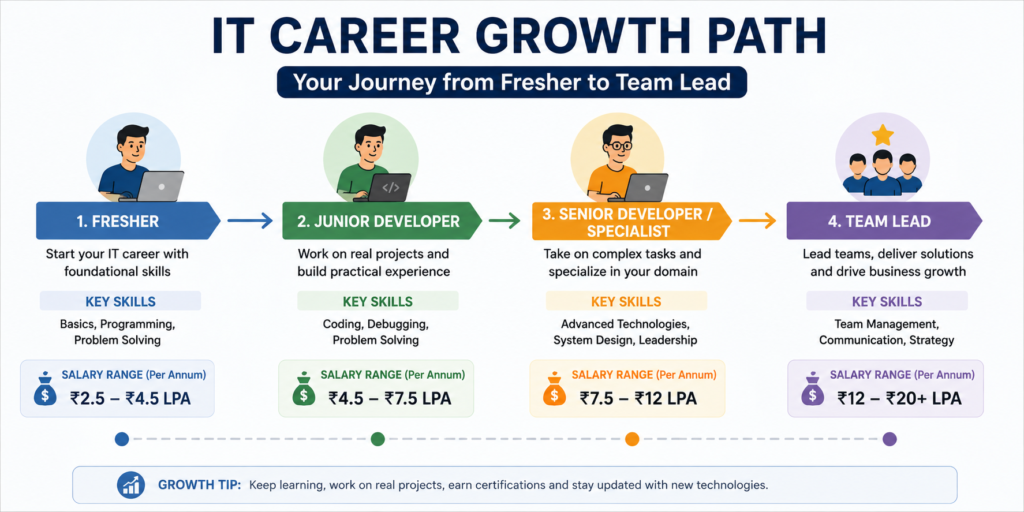
These are genuine IT course jobs available to freshers, and most of them don’t require years of formal education to get started—a certificate or diploma combined with hands-on project work is often enough. Salary expectations depend on skill level and specialization. An entry-level IT Engineer Salary in India typically starts between ₹2.5 LPA and ₹4.5 LPA, rising with experience, additional certifications, or a shift into specialized domains like cloud or cybersecurity. Holding a recognized IT Certification alongside a diploma often gives candidates an edge during recruitment, since employers value proof of practical skills over just theoretical knowledge.
Conclusion
IT courses after 12th offer a practical, faster route into a stable and well-paying career through focused, skill-based training. With flexible eligibility, reasonable fees, and strong industry demand, these courses suit students who want hands-on skills and quicker job entry. Whether you’re drawn to web development, data science, or cybersecurity, choosing a course based on your interest—and a training institute offering IT Courses in Pune with Placement support — can set the foundation for a rewarding career in technology. If you’re ready to take that next step, 3RI Technologies can help you find the right course and start building your career in IT.