
Artificial intelligence is transforming how businesses identify, stop, and handle cyberthreats, altering the way security teams operate on a daily basis. As cybercriminals adopt smarter tactics like automated phishing and deepfake scams, companies are hiring professionals who understand both security fundamentals and modern automated defense systems. For students and working professionals alike, this shift is opening doors to exciting, future-proof roles across industries, and enrolling in the right Cybersecurity course in Pune can help you build these skills early. If you’re exploring a career path in this space, understanding these trends is the first step toward staying relevant, competitive, and in-demand in the years ahead.
What is AI in Cybersecurity?
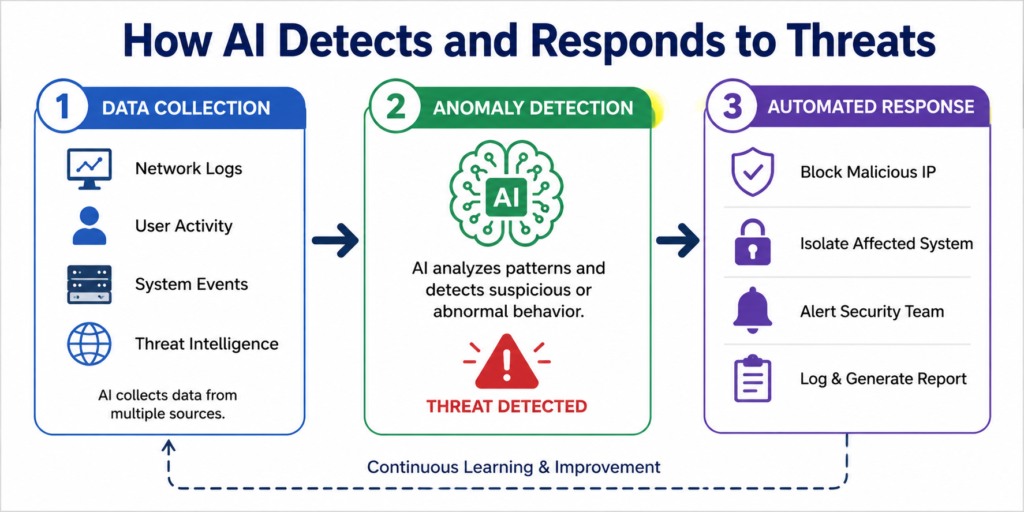
Machine learning, natural language processing, and automation come together in what is known as AI in Cybersecurity — the practice of identifying threats, analyzing patterns, and responding to attacks faster than traditional methods allow. Instead of relying purely on manual monitoring, security teams now use AI systems that learn from historical data to spot anomalies in real time.
Traditionally, security analysts had to manually review logs, sort through alerts, and investigate every suspicious activity one by one. This process was slow and often led to missed threats, especially when attacks happened outside working hours. AI changes this by working around the clock, learning from every new incident, and getting smarter with time. It does not get tired, does not miss patterns buried in large data sets, and can process millions of events in seconds — something no human team could match on its own.



In practice, this means:
- Threat detection — AI models flag unusual network behavior before it escalates into a breach.
- Automated response — Systems can isolate infected devices or block suspicious IP addresses instantly.
- Predictive analysis — Algorithms forecast potential vulnerabilities based on past attack patterns.
- Prevention of fraud — AI is used by banks and fintech companies to identify fraudulent transactions in milliseconds.
Essentially, AI acts as a force multiplier for security teams, handling the repetitive, data-heavy tasks so analysts can focus on strategic decision-making. This shift is exactly why Cybersecurity Careers now demand a working knowledge of AI Tools alongside traditional security skills.
Top AI Trends Shaping Cybersecurity Careers
Several developments are actively transforming job roles and required skill sets in this field. Below are the key trends every learner should know:
- AI-powered Security Operations Centers (SOCs): Modern SOCs handle thousands of daily security alerts, and doing this manually is slow and tiring. AI now sorts and prioritizes these alerts automatically, helping teams respond faster and reducing analyst workload significantly.
- Generative AI for threat simulation: Security teams use generative AI to create realistic phishing emails and fake attack scenarios for training purposes. This helps employees learn to spot real threats and improves overall company readiness against social engineering attacks.
- AI vs. AI attacks: Attackers now utilize AI to produce deepfake sounds or videos and send convincing phishing emails. To fight back, defenders need equally smart AI-driven detection tools, leading to a constant back-and-forth battle between attackers and security teams.
- Behavioral biometrics: Instead of relying only on passwords, Cybersecurity Tools now study how a person types, moves the mouse, or logs in daily. Any unusual pattern instantly signals a possible account takeover, adding an extra layer of protection.
- Cloud-native AI security: As more businesses shift to cloud platforms, AI is used to constantly monitor for misconfigurations, unusual access, and weak settings. This has become a basic requirement for any company handling sensitive data online.
These trends make it clear: professionals who combine cybersecurity fundamentals with strong AI Skills are far more employable than those relying on traditional knowledge alone.
Career Opportunities in AI-Powered Cybersecurity
The fusion of AI and cybersecurity has created several new and evolving job titles, each offering a different growth path and Cybersecurity salary in Pune range. Here’s a snapshot of roles gaining traction:
| Job Role | Core Responsibility | Expected Salary | Experience Level |
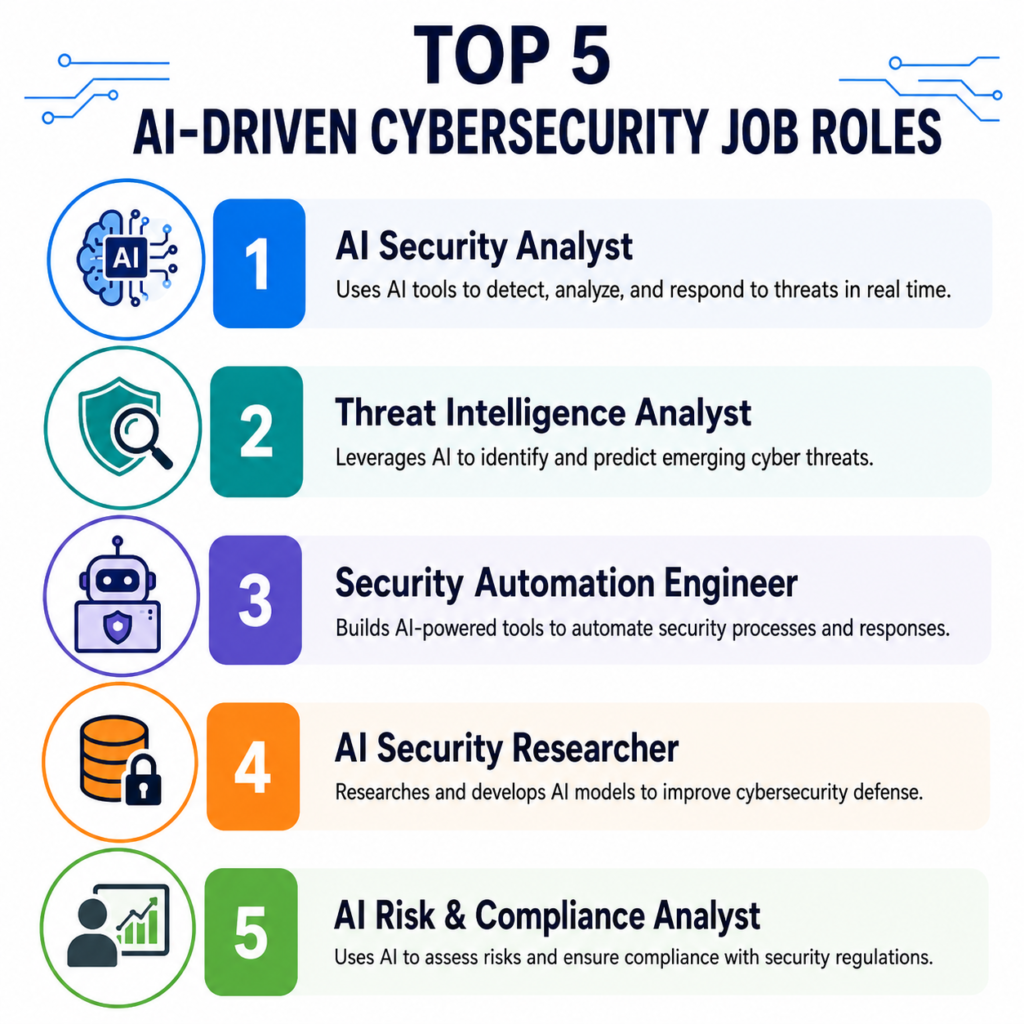
| AI Security Analyst | Monitors AI-driven threat detection systems and investigates flagged incidents | ₹4-7 LPA | 0-2 years |
| Machine Learning Security Engineer | Builds and secures ML models used in detection systems | ₹8-14 LPA | 2-5 years |
| SOC Analyst (AI-augmented) | Uses AI dashboards to triage and respond to alerts | ₹5-9 LPA | 1-3 years |
| Threat Intelligence Specialist | Uses AI tools to track emerging attack patterns globally | ₹7-12 LPA | 2-4 years |
| Cybersecurity Consultant | Advises organizations on integrating AI into their security posture | ₹12-20 LPA | 5+ years |
Beyond these roles, demand is growing across several industries and cities:
- Banking and finance — using AI to catch fraud and secure online transactions.
- Healthcare—protecting patient information and related medical devices.
- E-commerce — protecting payment systems and client information.
- IT services and startups — building AI-driven security products and services.
- Growing tech hubs like Pune — rising demand due to IT parks, startups, and global capability centers setting up cybersecurity teams.
For learners based in Maharashtra, a growing tech hub with rising demand for skilled talent makes this a practical time to build these in-demand skills while staying close to a thriving job market. Many training providers now design their curriculum specifically around AI-integrated security tools, bridging the gap between theory and real industry needs.
Skills and Certifications for AI Cybersecurity Career
Learning these skills the right way makes a big difference in how ready you feel for the job market. 3RI Technologies helps learners understand AI tools and core security concepts step by step through practical training, so they can use this knowledge to build a strong career in the future.
Professionals in this rapidly changing sector require a combination of technical and analytical skills. Employers today want candidates who can work alongside AI-driven tools, interpret data-driven alerts, and make quick decisions during an active incident.
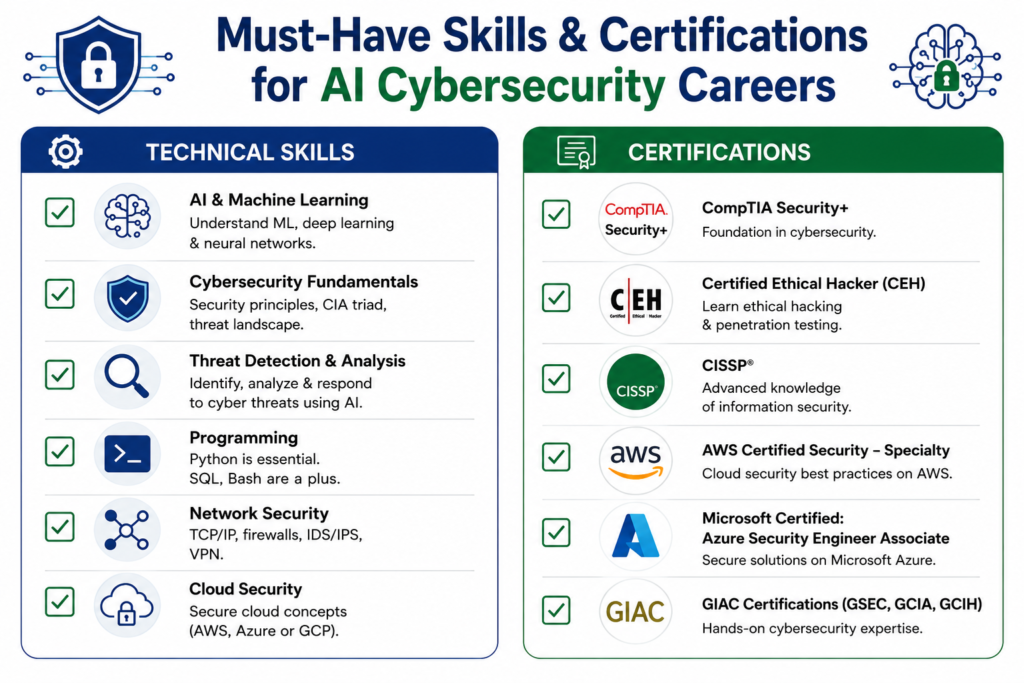
Core skills to build:
- Understanding of machine learning basics and how models are trained
- knowledge of SIEM tools (such as IBM QRadar or Splunk) improved by AI skills
- Python scripting expertise to automate security activities
- Cloud security fundamentals (AWS, Azure, or GCP)
- Strong grasp of network security and ethical hacking principles
Valuable certifications:
- Certified Ethical Hacker (CEH)
- CompTIA Security+
- Certified Information Systems Security Professional (CISSP)
- AI-focused security certifications now offered by several training institutes
Earning a recognized Cybersecurity certification significantly boosts credibility with employers, especially when paired with hands-on project experience.
For those seeking structured guidance, opting for a Cybersecurity course in Pune with Placement can simplify the transition from learning to employment. Such programs typically combine practical labs, real-world case studies, and interview preparation, helping learners enter the job market with confidence rather than just theoretical knowledge.
Conclusion
AI is no longer a futuristic concept in cybersecurity — it’s an everyday tool shaping how threats are detected and neutralized. The ongoing shift has opened a wide range of high-paying career opportunities for individuals who are ready to develop new skills. By combining traditional security knowledge with modern automated tools and hands-on training, professionals can position themselves for long-term success in this rapidly growing field. Whether you’re just starting out or looking to pivot, enrolling in a Cybersecurity course in Pune with Placement is a strategic way to build these skills and step confidently into the job market.


Frequently Asked Questions
1. Is AI replacing cybersecurity jobs?
No, AI is not replacing cybersecurity professions; rather, it is enhancing them. It automates repetitive tasks like alert sorting and log review, allowing professionals to focus on strategic threat analysis, investigation, and decision-making.
2. Does a career in AI cybersecurity require coding skills?
For entry-level positions, a basic understanding of scripting, particularly in Python, is beneficial but not usually required. It becomes more important for engineering-focused positions such as building or maintaining AI-based detection models.
3. Which certification is best for AI-integrated cybersecurity roles?
CEH, CompTIA Security+, and CISSP remain strong foundational choices. Training institutes like 3RI Technologies also offer guided support in choosing and preparing for the right certification path.
4. What is the average Cybersecurity salary in Pune for freshers?
Entry-level professionals typically earn between ₹4–7 LPA, with growth potential as they gain experience and specialized skills. Structured training, such as that offered by 3RI Technologies, can help learners reach higher salary brackets faster.
5. Does 3RI Technologies provide placement support for AI cybersecurity learners?
Yes, 3RI Technologies offers placement-focused guidance, including practical projects, interview preparation, and connections to hiring companies for learners completing their training.
6. What kind of practical training does 3RI Technologies offer for AI-focused cybersecurity roles?
3RI Technologies provides hands-on labs, real-world case studies, and exposure to AI-driven security tools, helping learners build job-ready skills for the current industry.