
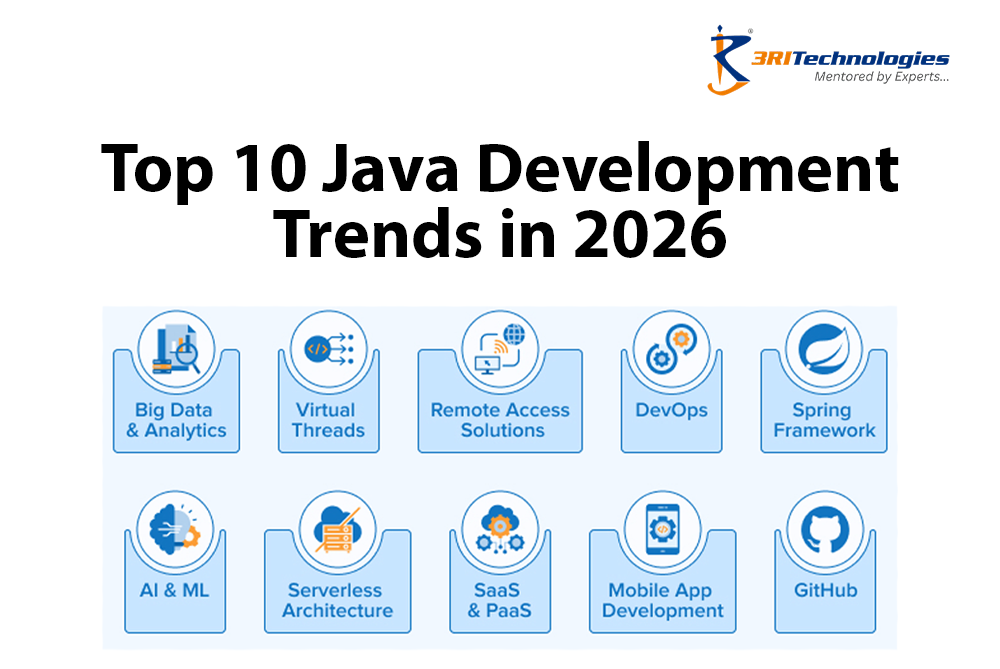
Is Java on its way out, or is everyone just tired of hearing about it? It’s a fair question, honestly. New languages keep stealing the spotlight, yet if you look behind the scenes of almost any banking platform, airline reservation system, or eCommerce application, you’ll still find Java powering the core. In 2026, current trends in Java technology show that the language isn’t fading—it’s evolving. With stronger cloud support, better performance, and modern development tools, Java continues to be a trusted choice for building scalable applications. That’s also why many students and working professionals are choosing Java Classes in Pune to build practical, job-ready skills and stay competitive in today’s software industry. Java is still one of the best technologies to master if you want to work in software development.
What’s New in Java Development?
Technology changes fast, but Java continues to prove its value year after year. Java is still the best option for creating safe, dependable, and extensive applications, despite the emergence of more recent programming languages. In 2026, the language is evolving with cloud-native development, AI integration, modern frameworks, and performance improvements that keep it relevant for today’s software industry.
Whether you’re just starting your coding journey, preparing for a software career, or enhancing your expertise through Java Courses in Pune, understanding the latest Java trends can help you stay ahead of the competition. Institutions like 3RI Technologies have updated their training programs with real-world projects, up-to-date frameworks, and experiential learning that mirrors actual workplace challenges in order to support industry requirements.

Why Java Technologies Still Matter in 2026
For years, Java has been trusted by businesses to build applications that are secure, scalable, and easy to maintain. Because of its adaptability, developers can produce anything from mobile solutions to cloud services and web apps. With constant innovation in java technologies, Java continues to meet the demands of modern software development while opening up exciting career opportunities for developers.
Why businesses continue to select Java
- Platform-neutral “Write Once, Run Anywhere” functionality
- Robust security framework for business applications
- A sizable development community and frequent updates
- Outstanding assistance with cloud-native development
- Numerous Java library ecosystems and frameworks
- Simple integration with IoT, Big Data, and AI solutions
Java Trends of 2026: Then vs Now
| Aspect | Traditional Approach | 2026 Trend |
| Architecture | Monolithic applications | Microservices and modular design |
| Deployment | On-premise servers | Cloud-native and serverless |
| Concurrency | Heavy platform threads | Lightweight virtual threads |
| Security | Manual patching after release | Automated, built-in security checks |
Training providers like 3RI Technologies have watched this demand play out up close, seeing more learners each year who want practical, job-ready Java skills instead of theory pulled from outdated course material.
Top 10 Java Development Trends to Watch
1. Cloud-Native Java Development Is Becoming the Standard
As more businesses move their applications to cloud platforms, Java developers are building software that is faster to deploy, easier to maintain, and capable of handling growing user demands. Cloud-native development has become one of the Top Java Development Trends because it allows organizations to release updates quickly while improving application reliability.
Why it matters
- Supports scalable application development
- Works seamlessly with Docker and Kubernetes
- Reduces infrastructure costs
- Makes deployment and updates much faster
Example: A banking application can automatically scale during peak transaction hours without affecting customer experience.
2. AI Is Expanding the Future of Java Applications
Research initiatives are no longer the only uses for artificial intelligence. Today, developers are integrating AI into Java-based applications to deliver smarter user experiences and automate decision-making. This is one of the most exciting current trends in Java technology, especially for enterprise software.
Common applications of AI
- Chatbots with intelligence
- Systems for detecting fraud
- Suggestion engines
- Solutions for predictive analytics
Real-world example: Online shopping platforms use AI-powered recommendations developed with Java technologies to suggest products based on customer preferences.
3. Spring Boot Continues to Lead Enterprise Development
Spring Boot continues to be the most popular Java framework for creating enterprise applications. It simplifies coding, speeds up development, and helps teams launch reliable applications with fewer configuration challenges.
Key advantages
- Faster application development
- Easy REST API creation
- Strong security support
- Excellent microservices compatibility
Many students joining Best Java Classes in Pune begin with Spring Boot because it is widely used in the software industry.
4. Microservices Are Replacing Large Monolithic Applications
Modern organizations are breaking large applications into smaller, independent services. This method increases adaptability and enables development teams to modify certain features without impacting the application as a whole.
Benefits of microservices
- Faster software releases
- Easier maintenance
- Better scalability
- Improved fault isolation
Example: In an e-commerce platform, payment, inventory, and order management operate as separate services, making updates simpler and more efficient.
5. Java Performance Is Improving with Virtual Threads
Recent Java releases have introduced Virtual Threads, making it easier for developers to build applications that manage thousands of users simultaneously. This improvement helps businesses deliver faster and smoother digital experiences.
Major benefits
- Better application performance
- Lower memory usage
- Improved concurrency
- Higher scalability for enterprise software
Many organizations adopting modern Java technologies are already exploring this feature for high-performance applications.
6. Cybersecurity Is Becoming a Core Development Priority
Instead of being an afterthought, security is now a crucial component of software development. Businesses now expect developers to build applications with secure authentication, encryption, and data protection from the beginning.



Crucial security procedures
- Multiple-factor verification
- REST APIs that are secure
- Encrypting data
- Access control based on roles
These practices help organizations protect sensitive customer information and reduce cyber risks.
7. Reactive Programming Is Improving User Experience
Applications today are expected to respond instantly, even during heavy traffic. Reactive programming helps developers build responsive systems that efficiently manage multiple requests without slowing down.
Why developers prefer it
- Faster response times
- Better resource utilization
- Supports real-time applications
- Improves application stability
Streaming platforms and financial services commonly use this programming model to deliver uninterrupted services.
8. Java Is Powering More IoT Solutions
The application of Java continues to grow beyond web development. Java is widely used for Internet of Things (IoT) projects because it works well across multiple devices and operating systems.
Common IoT applications
- Smart home devices
- Healthcare monitoring systems
- Industrial automation
- Connected logistics solutions
Its portability makes Java an excellent choice for building reliable IoT ecosystems.
9. DevOps Is Changing How Java Applications Are Delivered
Development teams now focus on continuous integration and continuous deployment to release software faster and more reliably.In the current work market, Java engineers that comprehend DevOps techniques are getting more and more valuable.
Essential DevOps tools
- Jenkins
- GitHub Actions
- Docker
- Kubernetes
Learning these tools alongside coding helps aspiring professionals strengthen their java developer skills and prepares them for modern software development workflows.
10. There is a high demand for full-stack Java developers
Companies increasingly look for developers who can build both backend and frontend applications. Learning Java along with frontend frameworks, databases, APIs, and cloud deployment opens up more career opportunities.
Skills employers expect
- Core and Advanced Java
- Spring Boot
- SQL databases
- REST APIs
- Git and GitHub
- Basic cloud computing knowledge
Student who looking for Java Courses in Pune with placement should prioritize programs that include practical training, interview preparation, and exposure to the latest Java Trends of 2026.


Applications of Java Across Industries
The application of Java extends far beyond traditional software companies. Its stability, scalability, and dependable performance make it a trusted choice for industries where reliability is critical and even a brief system outage can have significant consequences. That’s why almost every leading java development company continues to use Java for building secure, high-performance, and enterprise-grade applications that can grow with changing business needs.
- Banking and Finance: Core banking systems and payment gateways rely on Java for its security and consistent performance under heavy transaction loads.
- E-commerce: Large online retailers use Java to manage inventory, checkout systems, and customer data without slowing down during peak sales.
- Healthcare: Hospital management systems and patient record platforms often run on Java because of its reliability with sensitive data.
- Government and Public Sector: Large-scale citizen service platforms favour Java for its long-term support and proven track record.
- Android Development:Java is still a fundamental language for creating and managing Android apps.
This spread across industries is really why finishing a recognized Java certification course adds solid, practical weight to a resume, whichever industry a graduate ends up choosing.
Java Developer Skills with Java Training in Pune That Get You Hired
The demand for qualified Java specialists keeps rising as companies adopt cloud computing, artificial intelligence, automation, and digital transformation. Developing strong java developer skills goes beyond understanding the basics of coding. It requires hands-on experience, working on real-world projects, and learning modern development practices used in the industry. At the same time, knowing how to work with a java library can help developers write cleaner, more efficient code by reusing trusted components instead of building everything from scratch. These practical skills make Java developers more confident, productive, and job-ready. Professionals should concentrate on industry-relevant abilities that employers actively seek for when enrolling in Java Training in Pune.
Essential skills to Master Java programming
- Core Java fundamentals
- Advanced Java concepts
- Spring Boot and Hibernate
- REST API development
- Database administration and SQL
- Version control with Git
- Docker and Kubernetes basics
- Cloud deployment fundamentals
- Unit testing
- Problem-solving and debugging
For learners seeking structured career guidance, 3RI Technologies offers practical Java classes in Pune with placement live projects, professional mentorship, interview preparation and Your job preparation can be greatly enhanced by selecting a curriculum that prioritizes real-world projects and contemporary industry practices.