
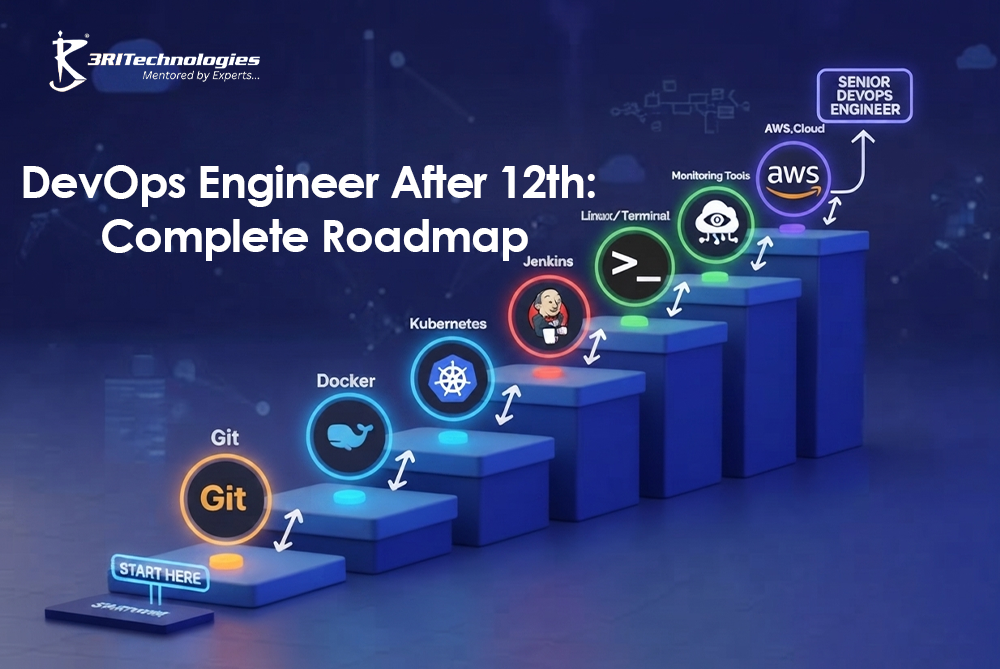
Selecting a career after high school can be exciting and confusing. With technology evolving rapidly, students are exploring career options beyond traditional engineering roles, and DevOps has emerged as one of the most promising fields in the IT industry. A DevOps Engineer helps organizations develop, test, deploy, and manage software efficiently by combining development, operations, and automation. The best part is that you don’t have to wait until graduation to begin your journey. With the right roadmap, consistent practice, and DevOps Training in Pune, you can start building industry-ready skills immediately after completing your 12th and prepare for a rewarding technology career.
Can You Work as a DevOps Engineer After 12th Grade?
Yes, you can become a DevOps Engineer after completing Class 12. Although many professionals in this field have engineering degrees, today’s IT industry values practical skills, hands-on experience, and problem-solving abilities just as much as formal education. If you’re passionate about technology and willing to learn consistently, you can begin preparing for this career right after school.
However, it’s important to understand that DevOps is not a single technology. It is a combination of different skills, including operating systems, programming, cloud computing, automation, networking, and collaboration tools. Instead of trying to master everything at once, focus on learning one concept at a time and gradually build your expertise.
While pursuing a diploma, bachelor’s degree, or certification, you can simultaneously develop practical DevOps skills by working on projects and practicing regularly. This balanced approach helps you stay ahead of many beginners and creates a strong foundation for your future career.
DevOps Engineer Career Path with DevOps Course in Pune
Becoming a DevOps Engineer requires a structured learning path where each step builds practical and technical knowledge. You start with basics like Linux and networking, then move toward automation tools, cloud computing, containerization, and orchestration. This step-by-step approach helps you understand real-world software development and deployment processes. Institutes like 3RI Technologies provide DevOps training in Pune with hands-on labs, live projects, cloud practice, and interview preparation to help students gain job-ready skills and industry exposure.
Step 1: DevOps Fundamentals
In DevOps, development and operations teams collaborate to produce software more quickly and effectively. Before learning tools, students must understand the basic idea of how software is planned, built, tested, and deployed. This helps you connect all DevOps tools later in a proper flow and understand why automation is important in IT industry.
Key Points:
- Understand what DevOps means in real companies
- Learn the fundamentals of the Software Development Life Cycle (SDLC).
- Understand how development and operations teams collaborate.
- Learn Agile basics and continuous delivery idea
Step 2: Linux Basics
The most popular operating system for servers and cloud environments is Linux. Linux is a daily tool used by DevOps engineers to manage servers and apps. Learning Linux helps you control systems using commands instead of graphical interfaces, which is faster and more powerful in real IT jobs.
Key Points:
- Learn basic Linux commands like ls, cd, mkdir
- Understand file and folder permissions
- Learn user and process management
- Practice terminal usage regularly
Step 3: Git and Version Control
In software development, Git is used to organize teamwork and track code changes.It enables several developers to collaborate on a single project without erasing each other’s contributions. GitHub stores these projects online so teams can collaborate easily.
Key Points:
- Create and manage repositories
- Learn commit, push, and pull
- Understand branching and merging
- Work with GitHub for project sharing
Step 4: Build Tools and CI/CD (Maven, Jenkins)
CI/CD is used to automate software building, testing, and deployment. Instead of doing everything manually, tools like Jenkins and Maven help speed up the delivery process and reduce errors. This is a crucial component of DevOps.
Key Points:
- Understand Maven build process
- Learn Jenkins pipeline creation
- Automate testing and deployment
- Understand CI/CD workflow
Step 5: Cloud Computing (AWS Basics)
Cloud computing allows companies to run applications without physical servers. AWS is one of the most popular cloud platforms used in DevOps jobs. It provides storage, computing power, and networking services on demand.
Key Points:
- Learn virtual machines concept
- Understand storage and networking in cloud
- Study IAM (security access control)
- Basic AWS services overview
Step 6: Docker
Docker helps you run applications inside containers so they work the same everywhere. It removes environment issues like “it works on my system.” This makes deployment fast and reliable in real projects.
Key Points:
- Understand containers and images
- Learn Dockerfile creation
- Use Docker commands
- Run applications in containers
Step 7: Kubernetes
Multiple containers can be managed simultaneously with Kubernetes. It helps in scaling applications automatically and managing system load. Big companies use Kubernetes to handle large applications smoothly.
Key Points:
- Learn pods and deployments
- Understand services and scaling
- Load balancing concept
- Container orchestration basics
Step 8: Infrastructure as Code (Ansible, Terraform)
DevOps engineers develop infrastructure using code rather than manually configuring servers. This guarantees consistency across environments, saves time, and lowers errors.
Key Points:
- Learn Terraform basics
- Understand Ansible automation
- Infrastructure as Code concept
- Server configuration automation
Step 9: Monitoring Tools
Monitoring helps you track application performance and fix issues before users face problems. It is important for maintaining system stability in production environments.
Key Points:
- Learn Prometheus basics
- Create Grafana dashboards
- Monitor system performance
- Set alerts for issues
Step 10: Real-Time Projects & Practice
The most important aspect of understanding DevOps is hands-on experience. You can learn how all the tools interact in actual business settings by working on real projects.
Key Points:
- Build CI/CD pipeline projects
- Work on cloud deployment
- Practice Docker and Kubernetes
- Create GitHub portfolio
- Prepare for interviews
Essential DevOps Tools Every Beginner Should Learn
A beginner doesn’t need to learn every DevOps tool simultaneously. Prioritize learning the most popular technologies before advancing to more sophisticated ones. Some essential DevOps Tools include:
- Linux
- Git & GitHub
- Python
- Docker
- Kubernetes
- Jenkins
- AWS
- Terraform
- Ansible
- Prometheus
- Grafana
Instead of memorizing commands, practice using these tools by creating small projects. The more hands-on experience you gain, the easier it becomes to understand how different tools work together throughout the software development lifecycle.
DevOps Career Opportunities & Salary
DevOps offers multiple career paths depending on your skills in cloud, automation, CI/CD, and infrastructure management. As experience increases, both responsibilities and DevOps salary growth improve significantly. Below is a simple comparison of key DevOps-related roles
| Career Role | Experience Level | Key Responsibilities | Average Salary (India) |
| DevOps Engineer | 0–3 years | CI/CD pipelines, basic automation, Linux, Git, deployments | ₹4–8 LPA |
| Cloud Engineer | 1–4 years | Manage AWS/Azure services, cloud infrastructure, networking | ₹5–10 LPA |
| Automation Engineer | 1–4 years | Script automation enhances workflows and minimizes manual work. | ₹5–11 LPA |
| Build & Release Engineer | 2–5 years | Software builds, release management, version control | ₹6–12 LPA |
| Infrastructure Engineer | 2–6 years | Server management, monitoring, system stability | ₹6–14 LPA |
| SRE / Platform Engineer | 3–8 years | System reliability, scaling, performance optimization | ₹10–25 LPA |
Conclusion
Becoming a DevOps Engineer after the 12th is a realistic goal for students who are willing to learn consistently and build their skills step by step. Start with strong fundamentals, follow a structured roadmap, practice with real projects, and keep exploring new technologies as the industry evolves. With patience, dedication, and continuous hands-on learning, you can build a successful career in one of the fastest-growing fields in IT. If you prefer expert guidance throughout your learning journey, joining Devops Classes in Pune can help you develop practical skills, gain confidence, and prepare for a rewarding career in DevOps.