
Learn Python, SQL, machine learning, Power BI and Generative AI in 5 months. Build 21 real projects, get your portfolio reviewed, and practise interviews with our placement team until you are ready to apply.

Taught by Aswathi Sasidharan
Data Science & AI Consultant · 8+ years in analytics
Talk to a counselor in 5 minutes
Having trouble? Call us at 8308103366 or Chat on WhatsApp.
Statistics to Generative AI
Weekday, weekend and fast-track batches
Including 2 capstone projects
No coding background needed
Course completion and internship
This course is for people in Pune who want a job in data, not just another certificate. You start with the basics that every analyst needs (statistics, Excel and SQL), move on to Python and machine learning, and finish with deep learning, Generative AI and Power BI dashboards.
Every module ends with hands-on work on real datasets. By the last month you will have a GitHub portfolio of projects you can open in an interview and explain line by line. You can take the same course in a classroom at one of our three Pune branches, live online from anywhere in India, or as a hybrid where you learn online and do project work on campus.
You don’t need a coding or maths background. A typical batch mixes fresh graduates, working professionals switching careers, and people restarting after a break. The trainer starts from the fundamentals and reviews your code as you go, so nobody gets left behind.
Course completion and internship certificate
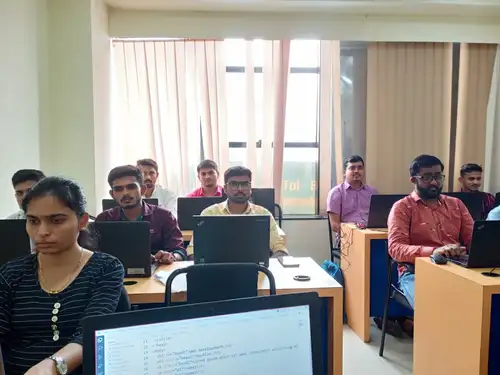
Classroom, live online or hybrid
24x7 doubt support and lifetime access to study material
EMI available at 0% interest
Anyone who is a graduate, a postgraduate, a college student or a working professional can join. Knowing some Python, SQL or statistics helps, but it is not required, because we teach all of it from the start.
You want your first job as a data analyst or data scientist and need real projects to talk about in interviews.
You work in IT, finance, sales or operations and want to move into a data role without quitting your job. Evening and weekend batches fit around work.
You come from commerce, arts, mechanical or another field. We start with Excel and basic statistics before any code.
You have a career gap and want an up-to-date, practical skill set and help getting back into interviews.
You want to graduate with a portfolio and an internship certificate, not just a degree.
Read our guide to data science course eligibility after 12th and graduation, or book a free demo class.
Theory is kept short. Each concept is explained, practised in a lab, and then used in a project before you move on.
| Stage | What the trainer does | What you get |
|---|---|---|
| Concept building | Explains statistics, ML basics and data science ideas with examples from real businesses | A solid analytical foundation |
| Hands-on labs | Walks you through Python notebooks, SQL queries, EDA and model building, step by step | Practical, tool-based skills |
| Assignments and projects | Reviews your code, points out mistakes, and runs business case studies in ML, analytics and dashboards | Project experience employers ask about |
| Interview preparation | Runs ML questions, case studies and mock interviews | Confidence for data science hiring rounds |
Syllabus 2026
The syllabus works for complete beginners and for working professionals. Each module builds on the one before it. Select a module to see what it covers.
The maths you actually need, explained with examples before formulas.
What data science is and why companies need it, big data, how data science relates to machine learning, the data science life cycle, platforms, real use cases and the skills a data scientist needs.
Linear algebra and matrices: zero, one, identity, diagonal, column and row matrices, and matrix operations.
Structured and unstructured data, measures of central tendency and dispersion, the empirical rule, confidence intervals and the central limit theorem.
Probability theory, conditional probability, data distributions, and normal and binomial distributions.
Large vs small sample tests, one-sample z-test, one- and two-sample t-tests, testing population means, and the chi-square test.
Still the quickest way to check data in most offices, so we make sure you are fluent.
Ranges and selection, fill and sequences, adding and moving cells, formulas, and relative vs absolute references.
SUM, AVERAGE, COUNT, MAX, MIN, RANDBETWEEN, TRIM, LEN, CONCATENATE, TODAY and NOW.
IF, IF with calculations, COUNTIF and COUNTIFS.
Visualising data with charts, chart elements and styles, data labels and quick layouts.
Querying, joining and summarising data, the skill almost every data job in Pune asks for.
Introduction to RDBMS and SQL, retrieving data, wildcard pattern matching and sorting with ORDER BY.
Aggregate functions, GROUP BY, HAVING, nested queries, and inner, multi and outer joins.
Adding and deleting columns, renaming columns and changing data types, creating tables from existing tables, and foreign key constraints.
From your first line of Python to analysing data with NumPy, Pandas and Matplotlib.
Why Python, setting up the environment, identifiers and keywords.
Data types and variables, conditions and loops, decorators, and working with files and directories.
Strings, lists, dictionaries and tuples, built-in functions and writing your own functions.
Array operations and functions, mean, standard deviation, max and min, reshaping and resizing, random functions and transpose.
Series and DataFrames, selecting and retrieving data, describe and info, pivoting, and combining data with merge and concatenation.
Basic plots and containers, components and properties, scatter plots, histograms, bar and pie charts, and box plots.
Hypothesis testing with SciPy: Shapiro, Spearman, independent t-test and chi-square.
Want more Python first? See our Python training in Pune.
Preparing data, building models, and knowing whether a model is actually any good.
Exploring data, handling missing values and outliers, feature engineering, train-test split, standard and min-max scaling, pre-processing, and up- and down-sampling.
Linear regression, R² and adjusted R², MSE and RMSE, gradient descent and logistic regression.
Accuracy, precision, recall, F1 score, confusion matrix, classification report, k-fold cross-validation, ROC and AUC, k-nearest neighbours, decision trees, random forest, support vector machines and hyperparameter tuning.
Similarity measures, k-means clustering and the elbow method.
Bagging, boosting and principal component analysis.
Neural networks for text, images and time-series data.
What AI is, its history, and where the market is heading.
Tokenisation, part-of-speech tagging, named entity recognition, semantic analysis and sentiment analysis.
How ANNs work, ReLU and softmax activations, and building and evaluating an ANN.
Convolution and filtering, padding, max pooling, dense layers, and building and evaluating a CNN.
How RNNs work, building and evaluating an RNN, and LSTM.
Cleaning and pre-processing time-series data, and forecasting with LSTM and ARIMA.
How large language models work and how to use them well in real data work.
How AI evolved from the 1950s to today, including the Turing Test and Deep Blue; ML, deep learning, neural networks, perceptrons and transformers such as BERT and GPT; narrow, general and superintelligent AI; and real applications in customer service, marketing and finance.
What Generative AI is, how it differs from traditional AI, large language models, and how GPT, Gemini and Claude compare.
Prompt structure (context, task, output), zero-shot, few-shot, chain-of-thought, ReAct and role-based prompting, common mistakes and how to fix them, reusable prompt templates, and hands-on task automation with ChatGPT and Claude.
Related course: Generative AI course in Pune.
Version control, so your projects live in a portfolio recruiters can see.
Introduction to Git and distributed version control, the Git life cycle, clone and commit, push and update, and stash, move, rename and delete operations.
From connecting to data to publishing a dashboard people can use.
Why businesses need BI, Power BI Desktop, Service and Mobile, Report Builder vs paginated reports, installation, the interface, and data sources such as Excel, CSV, SQL Server, web APIs, Azure, SharePoint, OneDrive and folders.
Import vs DirectQuery; splitting, merging and renaming columns; changing data types; column from examples; filtering, sorting and grouping rows; handling missing values; removing duplicates; pivot and unpivot; and conditional columns.
Bar, line, pie and donut charts, matrix and table visuals, cards, maps, slicers and filters, synced slicers, drill-down and drill-through, tooltips, formatting and custom themes.
Related course: Power BI course in Pune.
Machine learning, deep learning and Power BI projects, two capstones, and industry case studies.
This is where everything comes together. See the full list of projects you’ll build.
Syllabus updated October 2026. Module content is reviewed as tools and hiring needs change, so your batch may include newer topics.
You will work on 21 real-time projects during the course. Every project goes on your GitHub, and the trainer reviews your code before it does. Here is a selection.
Predict how long an order will take to arrive, from raw data to a tested model.
Predict equipment failure early, so parts can be replaced before a breakdown.
These case studies follow a real project from data collection to cloud deployment, including how to choose features and models, how much data is enough, and how CI/CD works in a data project.
| Domain | The business problem | What you practise |
|---|---|---|
| Insurance | Decide a client’s premium from their profile, to keep existing clients and win new ones | Feature selection, model choice, CI/CD and cloud deployment |
| Healthcare imaging | Help a hospital detect pneumonia in chest X-rays automatically | Image pre-processing and augmentation, transfer learning, incremental learning |
| HR and NLP | Assess a job applicant’s level of English communication | Text representation and pre-processing, transfer learning for text |
| Manufacturing | Predictive maintenance of engine parts, so they are replaced before a machine fails | Time-series pre-processing and ML/DL models for time-series data |
| Sales | Forecast product demand so the company can plan stock and staff | Time-series forecasting and deployment |
You practise every tool on real datasets, in the same environments data teams use: Jupyter Notebook, Google Colab and GitHub.





Also covered: Python, Pandas, Matplotlib, Seaborn, SciPy, Scikit-learn, XGBoost, TensorFlow and Keras, Power Query, Git and Claude.

Data Science & AI Consultant, 3RI Technologies
Our data science mentors are working data scientists and analysts who have worked across retail, banking, healthcare, telecom and SaaS. They teach the way data work is actually done in companies: how a project goes from data collection to deployment, how data scientists work with engineering and business teams, and which skills matter most for entry and mid-level roles.
They have guided hundreds of learners from non-tech backgrounds, and they are good at explaining hard ideas simply. They don’t just prepare you for a certificate. They prepare you for your first day in a data job.
3RI Technologies has trained IT professionals in Pune since 2010. We run classroom training from three Pune branches and live online batches for learners across India.
Training in Pune since 2010
From 4,000+ Google reviews
Placements a year
Hiring partners
Pick a batch that fits your day. If none of these timings work for you, ask us about the next one.
Sr. No.
Module Name
Batch Start Date
Batch Days
Timing
Enroll
| Batch | When | Best for |
|---|---|---|
| Weekday morning | Monday to Friday, 7:00 AM to 9:00 AM | Students and job seekers with free mornings |
| Weekday evening | Monday to Friday, 7:00 PM to 9:00 PM | Working professionals, after office hours |
| Weekend | Saturday and Sunday, 9:00 AM to 1:00 PM | Working professionals (our most popular batch) |
| Fast track | Daily intensive sessions, 2 to 3 months | Anyone who wants to finish quickly |
| Live online | As per batch schedule | Learners anywhere in India: same syllabus, trainers and placement support |
Regular batches take 4 to 5 months to complete.
Your fee depends on the batch type, the mode (classroom, online or hybrid) and any offer running that month, so we don’t print a number that could be out of date. Call or WhatsApp us and a counsellor will share the exact fee, current discount and EMI breakdown in about 5 minutes. There is no pressure to enrol on the call.
| When you pay | Share of fee |
|---|---|
| On registration | 10% |
| 1st instalment, first month of joining | 70% |
| 2nd instalment, second month | 20% |
No hidden charges. Discounts are available.
Across Pune, intermediate data science programs of 4 to 6 months usually cost ₹35,000 to ₹70,000, and advanced industry programs cost ₹80,000 to ₹1.5 lakh.
For a full breakdown, read our guide to data science course fees and duration in Pune.
Pune has become one of India’s busiest markets for data jobs. Companies in Hinjewadi, Kharadi, Baner and Magarpatta are building analytics teams across IT services, product companies, manufacturing, banking and healthcare, and many still struggle to find trained people.
Analyse business data, build dashboards and reports. The most common entry-level role, hiring in every industry.
Build predictive models and use machine learning to solve business problems.
Develop, test and deploy ML models into production systems.
Use Power BI and Tableau to turn raw data into business decisions.
Build and maintain data pipelines. One of the best-paid entry paths.
A newer role that combines data skills with generative AI tools. Few trained candidates exist yet.
| Experience | Typical salary |
|---|---|
| Fresher (0 to 1 year) | ₹4 to 7 LPA |
| Early career (1 to 3 years) | ₹7 to 12 LPA |
| Mid level (3 to 5 years) | ₹12 to 18 LPA |
| Senior data scientist (5+ years) | ₹18 to 30 LPA and above |
Salaries vary by company, role and skills. For more detail, see job opportunities after a data science course in Pune and our career roadmap after a data science course.
Placement support starts before the course ends and doesn’t stop on the last day of class. If you have finished your projects and are actively interviewing but haven’t got an offer yet, our placement team keeps sharing openings, helps you fix your resume based on interview feedback, and keeps you in the interview loop until you are placed. We trained you, and we want to see you hired.
Our students have been hired by TCS, Cognizant, Infosys, IBM, Accenture, Capgemini, Persistent Systems, Zensar Technologies, KPIT Technologies, Mphasis, ZS Associates, Siemens, Citibank, PubMatic, Thoughtworks, R Systems, BMC Software, Markets and Markets, Synerzip and Veritas, along with many Pune-based startups and analytics firms.


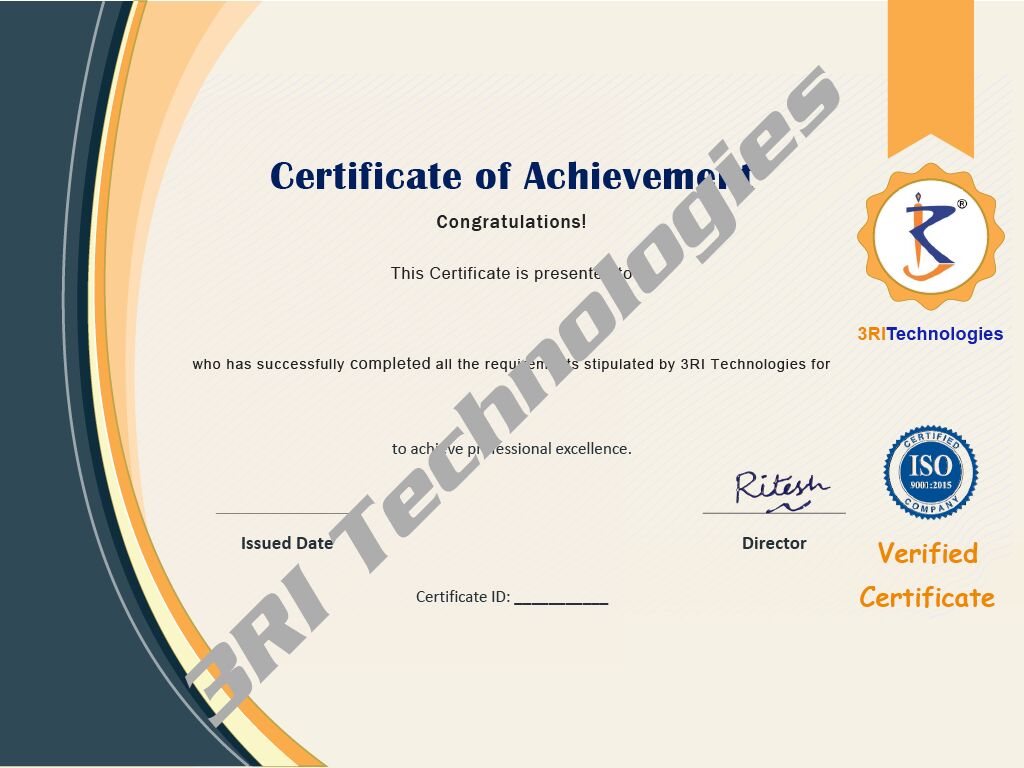
When you finish the course and your projects, you receive a 3RI Technologies course completion certificate and an internship certificate. Add both to your resume and LinkedIn profile, along with the GitHub projects that back them up.
Want to add a global certification as well? Ask our counsellors about certification exam support.
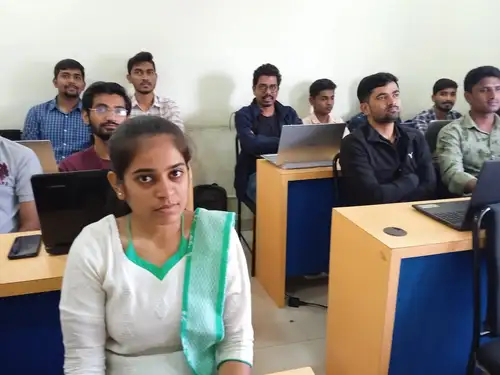
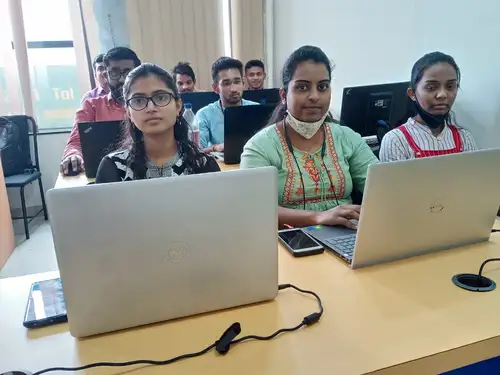
Join a classroom batch at whichever of our three Pune branches is closest to you, or attend the same course live online.
405, 4th Floor, Rainbow Plaza, Pimple Saudagar, Pune 411017
Handy for Wakad, Hinjewadi, Pimple Gurav, Rahatani, Aundh and Pimpri-Chinchwad.
Call or WhatsApp: +91 830 810 3366 · Email: [email protected]
The regular course takes about 5 months (4 to 5 months depending on your batch). The fast-track batch takes 2 to 3 months with daily sessions. Online batches follow the batch schedule.
The fee depends on the batch type, the mode (classroom, online or hybrid) and current offers, so call or WhatsApp us on +91 830 810 3366 for the exact figure. You can pay through 0% interest EMI: 10% on registration, 70% in the first month and 20% in the second. For comparison, most 4 to 6 month data science programs in Pune cost ₹35,000 to ₹70,000. See our data science course fees and duration guide.
Yes. The course starts with Excel, basic statistics and Python from scratch, and many of our students come from commerce, arts, mechanical and other non-IT fields. Read who is eligible for a data science course.
Graduates, postgraduates, college students and working professionals from any stream can join. Knowing some Python, SQL or statistics helps but is not required.
Yes. The weekend batch runs on Saturday and Sunday from 9:00 AM to 1:00 PM and is our most popular batch with working professionals. We also run weekday morning and evening batches.
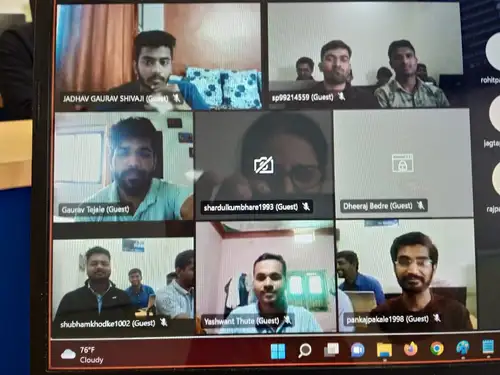
Yes. Live online batches use the same syllabus, the same trainers and the same placement support as our Pune classroom batches. You can also choose hybrid: learn online and do project work on campus. We also have a dedicated online data science course page.
You will mainly use Python and SQL, along with Pandas, NumPy, Matplotlib, Seaborn, SciPy, Scikit-learn, XGBoost, TensorFlow and Keras, Power BI, Excel, Git and GitHub, and Generative AI tools like ChatGPT and Claude.
Yes. Placement support covers interview questions, resume and LinkedIn building, aptitude and soft skills, a 5-day mock interview program, and interview scheduling with our hiring partners. If you are interviewing but not yet placed after the course, we keep supporting you until you are.
In Pune, freshers in data roles typically earn ₹4 to 7 LPA. With 1 to 3 years of experience this usually rises to ₹7 to 12 LPA, and senior data scientists can earn ₹18 to 30 LPA or more. Your salary depends on the company, the role and your skills.
Yes. You build 21 real-time projects, including two capstones (delivery duration prediction and machine failure prediction), plus Power BI dashboards and industry case studies in insurance, healthcare, HR, manufacturing and sales.
You receive a 3RI Technologies course completion certificate and an internship certificate once you finish the course and projects.
Yes. You can join a free demo class online or on campus. Use the Book a free demo class button on this page, or call +91 830 810 3366.
We have three branches: Pimple Saudagar (Rainbow Plaza), Deccan (DurgaShankar, near Sambhaji Park) and Nal Stop (Mantri Vertex, Law College Road). You can also join live online from anywhere.
You keep lifetime access to the study material, and you can reach our mentors for doubt clearing after the course.
Talk to a counsellor for free. We’ll look at your background and tell you honestly which path fits.
Learn the way industry wants it…
Our expert career counsellor will call you within 30 min*
Personalized upskilling roadmap in a 15 – minute expert call
University & Industry Recognized Programs
No spam | One call only | Free resume review after your call